
Travelers heading to Madagascar have two main options for obtaining entry authorization: the eVisa (applied for online before departure) and the Visa on Arrival (obtained at the airport). While both lead to the same result – permission to enter Madagascar – the process, cost, and convenience differ significantly. This guide breaks down every difference so you can decide which route suits your trip best.
What Is the Madagascar eVisa?
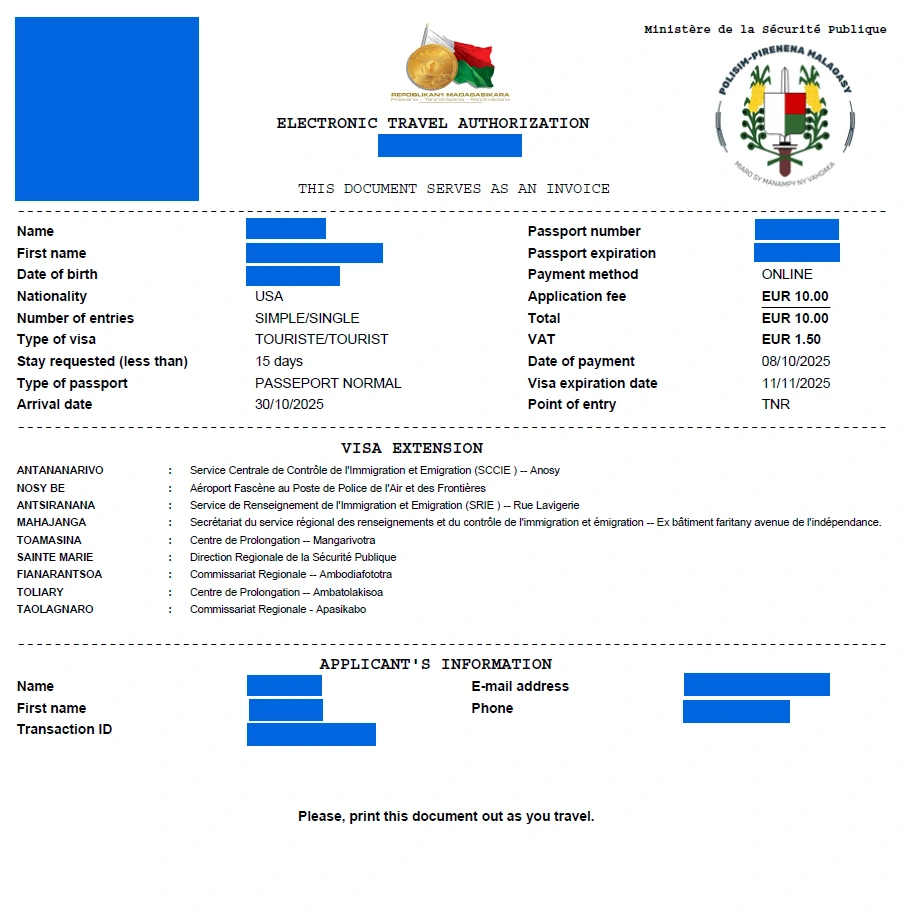
The Madagascar eVisa is an electronic travel authorization that you apply for entirely online before your flight. The application is processed through the official Madagascar eVisa portal, and once approved, you receive a confirmation document via email. You present this confirmation at immigration upon landing.
Key characteristics of the eVisa:
- Applied for online – no embassy visit or mailing documents
- Processed in advance – approval typically arrives within 2-5 business days
- Confirmation sent by email – print it or keep a digital copy on your phone
- Payment made online – via credit or debit card during the application
- Available for tourism and business travel purposes
The eVisa system was introduced to streamline entry and reduce waiting times at Madagascar’s international airports.
What Is the Visa on Arrival?
The Visa on Arrival (VOA) is obtained directly at the immigration counter when you land in Madagascar. You fill out a form, present your passport, pay the fee in cash, and receive a visa sticker in your passport on the spot.
Key characteristics of the Visa on Arrival:
- Obtained at the airport – no advance application required
- Immediate issuance – processed within minutes at the immigration desk
- Payment in cash – typically in EUR, USD, or MGA (Malagasy Ariary)
- No pre-approval needed – walk up and apply upon landing
- Available at major entry points – Antsiranana (Diego Suarez), Toamasina, and Antananarivo (Ivato International Airport)
The VOA has been the traditional method for decades and remains popular with spontaneous travelers.
Side-by-Side Comparison: eVisa vs Visa on Arrival
| Feature | eVisa | Visa on Arrival |
|---|---|---|
| Application location | Online (anywhere with internet) | At Madagascar airport immigration |
| Processing time | 2-5 business days (advance) | Minutes at the airport |
| Payment method | Credit/debit card (online) | Cash (EUR, USD, or MGA) |
| Cost | ~$35-$40 USD (varies by type) | ~$35-$40 USD (varies by type) |
| Advance preparation | Required | Not required |
| Documents at entry | Printed/digital confirmation + passport | Passport + completed form |
| Queue time at airport | Shorter (pre-cleared) | Longer (wait for processing) |
| Risk of denial | Before departure (plenty of time to adjust) | At arrival (limited options if denied) |
| Best for | Planned trips, peace of mind | Spontaneous travel, last-minute bookings |
Cost Comparison
The fees for both the eVisa and the Visa on Arrival are generally comparable. As of the latest available information:
- 30-day tourist visa: Approximately $35 USD or €35 EUR
- 60-day tourist visa: Approximately $40 USD or €40 EUR
Payment differences are important to note. The eVisa is paid by card online during the application, which means you know the exact amount in advance. The VOA requires cash payment at the airport – and change may not always be available. Travelers who arrive without sufficient cash in the correct currency may face delays.
Some nationalities may have different fee structures, so always verify the current rates before traveling.
Processing Times Compared
eVisa processing typically takes 2 to 5 business days after submission. During peak travel seasons (June-September and December-January), processing may take slightly longer. Applying at least two weeks before departure is strongly recommended.
Visa on Arrival processing happens in real time at the airport. However, “real time” depends on how many flights have just landed. During busy periods, the immigration queue can stretch to 30-60 minutes or more. If you are among the first passengers off the plane, you may breeze through in 10 minutes.
Required Documents
For the eVisa:
- Valid passport (at least 6 months remaining validity)
- Passport-sized photo (digital upload)
- Return or onward flight booking
- Accommodation details in Madagascar
- Credit or debit card for payment
- Email address for receiving the confirmation
For the Visa on Arrival:
- Valid passport (at least 6 months remaining validity)
- Completed arrival form (provided at the airport or on the plane)
- Cash in EUR, USD, or MGA for the visa fee
- Return or onward flight booking (may be requested)
Both options require the same core documents – a valid passport with sufficient remaining validity is non-negotiable.
Which Should You Choose?
Choose the eVisa if:
- You like having everything sorted before you travel
- You want to avoid long queues at the airport
- You prefer paying by card rather than carrying large amounts of cash
- You want to know in advance that your visa is approved
- You are traveling during peak season when airport queues are longest
Choose the Visa on Arrival if:
- You are booking a last-minute trip and don’t have time for eVisa processing
- You are already in transit and didn’t apply online
- You prefer the simplicity of handling everything on arrival
- You have easy access to EUR or USD cash
- Your travel plans are flexible and you don’t mind a short wait
Important Tips for Both Options
- Apply early for the eVisa – don’t wait until the day before your flight. Technical issues or high demand can cause delays.
- Bring exact cash for VOA – immigration counters may not have change for large bills.
- Check your passport validity – both options require at least 6 months of remaining validity from your date of entry.
- Print your eVisa confirmation – while a digital copy on your phone works, having a paper backup avoids problems if your phone battery dies or you have connectivity issues.
- Verify current requirements – visa policies can change. Always check the latest information on the official Madagascar immigration website before traveling.
Can You Switch Between Options?
Yes. If you applied for an eVisa but it hasn’t arrived by the time you fly, you can still obtain a Visa on Arrival at the airport – provided you meet all requirements and have cash ready. Conversely, if you planned to get a VOA but want the security of pre-approval, you can apply for an eVisa as long as you allow enough processing time before your departure.
Frequently Asked Questions
Is the eVisa cheaper than the Visa on Arrival?
The fees are essentially the same for both options. The eVisa may include a small processing fee depending on the payment method used, but the base visa cost is identical.
Can I extend my visa after arriving in Madagascar?
Yes, visa extensions are possible at the immigration office in Antananarivo. You can extend a 30-day visa up to 60 days, or in some cases up to 90 days. Extensions must be applied for before your current visa expires.
What happens if my eVisa application is denied?
If your eVisa is denied, you will receive a notification with the reason. You may still be eligible for a Visa on Arrival, depending on the denial reason. Alternatively, you can address the issue and reapply.
Do children need a separate eVisa or VOA?
Yes, every traveler – including infants and children – needs their own visa. Each child must have a valid passport and their own eVisa or VOA.
Which nationalities can apply for both the eVisa and VOA?
Most nationalities are eligible for both options. However, some nationalities may have restrictions. Always check the current eligibility list on the official Madagascar immigration portal.
Is the eVisa valid for multiple entries?
Standard tourist eVisas are typically issued for single entry. If you plan to leave Madagascar and return, you may need to apply for a new visa or request a multiple-entry visa.